
Can You Iron or Dry-Clean Shirts with Shell Buttons?
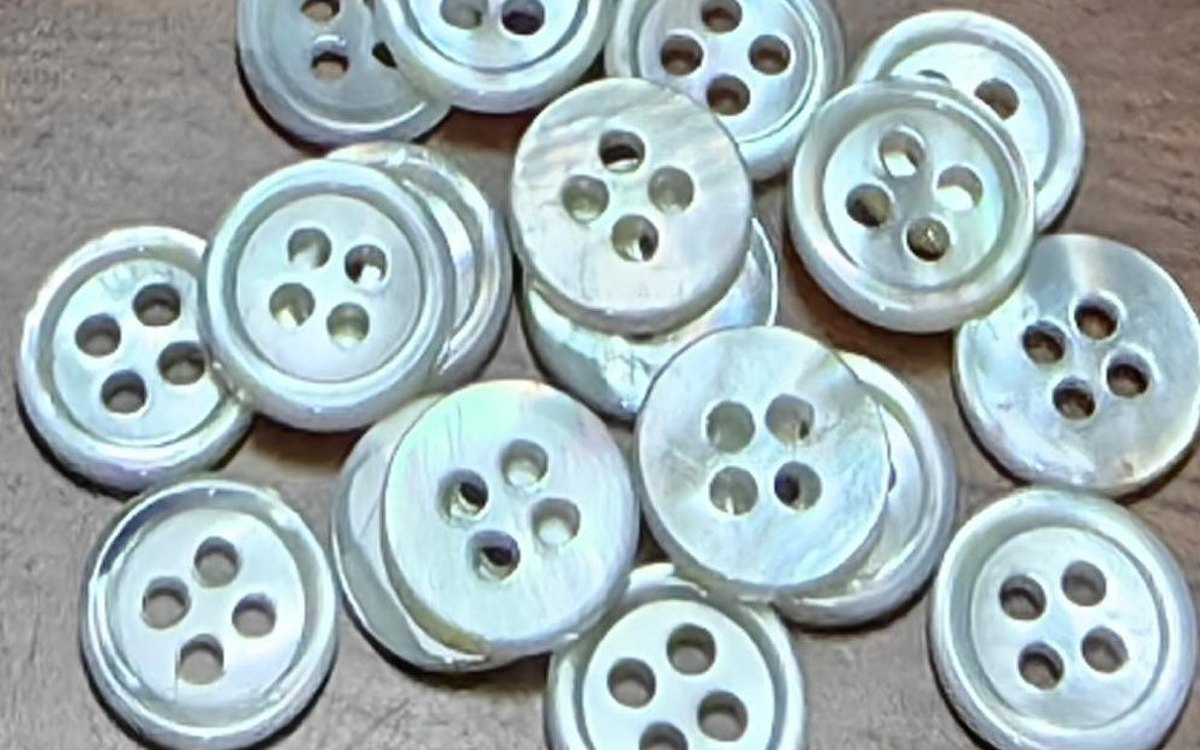
Yes, you can iron and dry-clean shirts with shell buttons, as long as the buttons are protected from direct, concentrated heat and pressure. Genuine mother of pearl handles normal household ironing very well when you iron around the buttons or work from the reverse side of the fabric. The risk comes mainly from industrial shirt presses, which clamp hot plates down on the whole front of a shirt, and from long tumbling in a hot dryer.
For dry cleaning, the simplest solution is to ask your cleaner for a soft press or hand finish and to cover or protect the shell buttons before pressing. With these habits, shell buttons on shirts, blouses and summer jackets can keep their lustre for many years. This guide explains why heat and pressure matter, how to iron a shirt with mother of pearl buttons step by step, what to tell a dry cleaner, and what usually causes yellowing or loss of shine.
Why heat and pressure matter for shell buttons
Shell buttons are cut from the nacre of cultured pearl oysters, trochus and freshwater mussel shells. Nacre is a natural composite: very thin plates of calcium carbonate (aragonite) held together by a fine organic layer. This structure gives mother of pearl its depth and iridescence, and it is also strong for its weight. Still, like any natural mineral material, it can crack if it is heated quickly and then squeezed hard between two rigid surfaces.
A home iron moving across fabric meets the button only for a moment, and the fabric itself acts as a cushion. A commercial press is different: it closes with high force on a flat button, often at high temperature, and holds it there. That combination is the most common reason a shell button chips or splits. Thicker buttons are naturally more robust, which is why many shirtmakers choose a slightly thicker shell button for shirts that will be laundered professionally. You can read more about this in our shell button thickness guide.
How to iron a shirt with mother of pearl buttons
Ironing shirts with shell buttons takes no special equipment. A few habits protect the buttons and give a crisp result:
- Iron from the reverse. Lay the button placket face down on a folded towel and iron the back of the fabric. The towel lets the buttons sink in, so the fabric gets the heat while the buttons stay out of the way.
- Use the iron tip around buttons. On the front, guide the point of the iron between the buttons rather than over them.
- Keep the temperature to the fabric. Cotton and linen need high heat, but you can lower it slightly near the placket. Silk and fine blends need less heat anyway.
- Use a pressing cloth for delicate shirts. A thin cotton cloth between iron and fabric spreads the heat and protects both fabric and shell buttons.
- Steam is fine. Short bursts of steam do not harm mother of pearl; just avoid resting the hot plate on the button.
The same approach works on cuffs and collars. Unbutton the cuff, lay it flat with the buttons facing down into the towel, and iron from the inside.
Dry cleaning shirts with shell buttons
Dry cleaning solvents are not the main concern for shell buttons; the pressing stage is. Professional cleaners often finish shirts on shirt presses or form finishers that work quickly with strong heat and pressure. When you hand in a shirt with mother of pearl buttons, it helps to say:
- "Soft press, please" or "hand finish", so the shirt is not put through a hard clamping press.
- "Please cover the buttons". Many cleaners use small foil or padded button covers, or they can press around them.
- "No hot tumbling" if the shirt will be laundered rather than dry-cleaned.
For couture, bridal and very delicate pieces, some owners and cleaners remove the shell buttons before cleaning and sew them back on afterwards. This is the safest choice for garments with large or very thin decorative shell buttons.
Washing temperature, detergents and tumbling
Most shirts with shell buttons are washed rather than dry-cleaned. Gentle machine washing at 30 °C to 40 °C is generally comfortable for genuine mother of pearl, and several button brands label their 100% mother of pearl buttons as washable at 40 °C. Higher temperatures place more stress on the shell, so a moderate programme is the better habit.
| Care step | Recommendation for shell buttons |
|---|---|
| Machine wash | 30–40 °C, gentle or shirt programme |
| Detergent | Mild, neutral detergent; avoid bleach and strong stain removers on the buttons |
| Laundry bag | Useful for delicate shirts; it reduces knocks against the drum |
| Spin | Moderate speed is enough for shirts |
| Tumble dryer | Low heat or line dry; long hot tumbling increases the risk of chipping |
| Ironing | From the reverse, around the buttons, towel underneath |
| Dry cleaning | Ask for soft press and covered buttons |
Tumbling is worth a special mention. In a dryer, buttons strike the drum and each other many times. Shell is hard, but repeated impacts at the edge are what tend to chip it. Buttoning the shirt before washing and using a lower dryer setting both help.
Acids, perfume and everyday contact
Because nacre is calcium carbonate, it reacts with acids. Vinegar, citric acid descalers, some stain removers and strongly acidic cleaning products can dull the surface if they sit on the buttons. Perfume and hairspray contain alcohols and other ingredients that may affect the lustre over time when sprayed directly on the button. It is a good habit to apply perfume before dressing and to rinse away any acidic spill promptly with plain water.
Why shell buttons can yellow or lose lustre
Natural shell is very stable, but its appearance can change slowly. The exact cause varies from button to button and garment to garment, so the points below are typical tendencies rather than rules:
- Residues. Detergent, softener, starch or perspiration residues can build up on the surface and give a dull or slightly yellow film. A gentle wipe with a damp cloth and a thorough rinse often restores the shine.
- Repeated strong heat. Frequent hard pressing at high temperature may gradually affect the organic layer between the nacre plates, which can show as dullness or fine surface lines.
- Acidic or bleaching products. These can etch the surface, reducing the mirror-like lustre.
- Natural colour of the shell. Some shells, such as yellow mother of pearl or trocas, have a warm tone by nature. This is part of their character, not a sign of damage.
Our full care guide for shell buttons covers storage, cleaning and everyday wear in more detail.
Advice for brands and shirtmakers
If you produce shirts with shell buttons, the care label and the button specification work together. Many brands choose a standard 2.8 mm or a thicker shirt button for garments that will see frequent professional laundering, and they test sewn samples through their usual wash and press cycle before setting the label. Clear care wording such as "wash at 30 °C, iron on reverse, protect buttons when pressing" helps the end customer keep the garment beautiful. For button choices by shirt type, see our guide to mother of pearl shirt buttons, or browse men's shirt shell buttons.
Before ironing a dress shirt, take out the collar stays and slide them back in once the collar has cooled. Our article on mother of pearl collar stays explains sizes and care.
FAQ
Can you iron over mother of pearl buttons?
It is best not to rest a hot iron directly on them. Iron around the buttons with the tip of the iron, or iron the shirt from the reverse side on a towel.
Will dry cleaning ruin shell buttons?
Not usually. The main risk is a hard shirt press. Ask for a soft press or hand finish and for the buttons to be covered.
Can shell buttons go in the tumble dryer?
Low heat is generally fine, but line drying is gentler. Long, hot tumbling increases the chance of chipped edges.
What temperature can mother of pearl buttons be washed at?
A gentle wash at 30–40 °C with mild detergent suits most shirts with genuine shell buttons.
Why did my shell buttons turn dull?
Often it is a film of detergent, starch or perspiration. A damp cloth and a rinse usually help. Acids, bleach and repeated hard pressing can also reduce lustre.
Shell buttons that last
Treated with a little care, genuine shell buttons stay bright through years of washing and pressing. For bulk orders, samples and a price offer, visit our wholesale page, or explore 100% natural shell buttons in our online shop.
Related guides
 Mother of Pearl Snap Buttons: Pearl Snaps for Western Shirts
Pearl snaps explained: how mother of pearl snap buttons are made, where they appear on western shirts and how they compare with sew-on shell...
Read →
 Shirt Collar Styles: Which Collars Need Collar Stays and Buttons
A guide to shirt collar styles – point, spread, cutaway, button-down, wing, club and band – with the collar stays and shell buttons each...
Read →
 Trocas and Mother of Pearl Buttons for Suits and Shirts: Finishes, Colours and Sizes
A practical guide for tailors and shirt makers: shiny, matt, lacquered and laser-engraved trocas and mother of pearl buttons, rimmed and bowl profiles, and...
Read →
