
Mother of Pearl Buttons in Traditional Dress: From Tracht to Pearly Kings
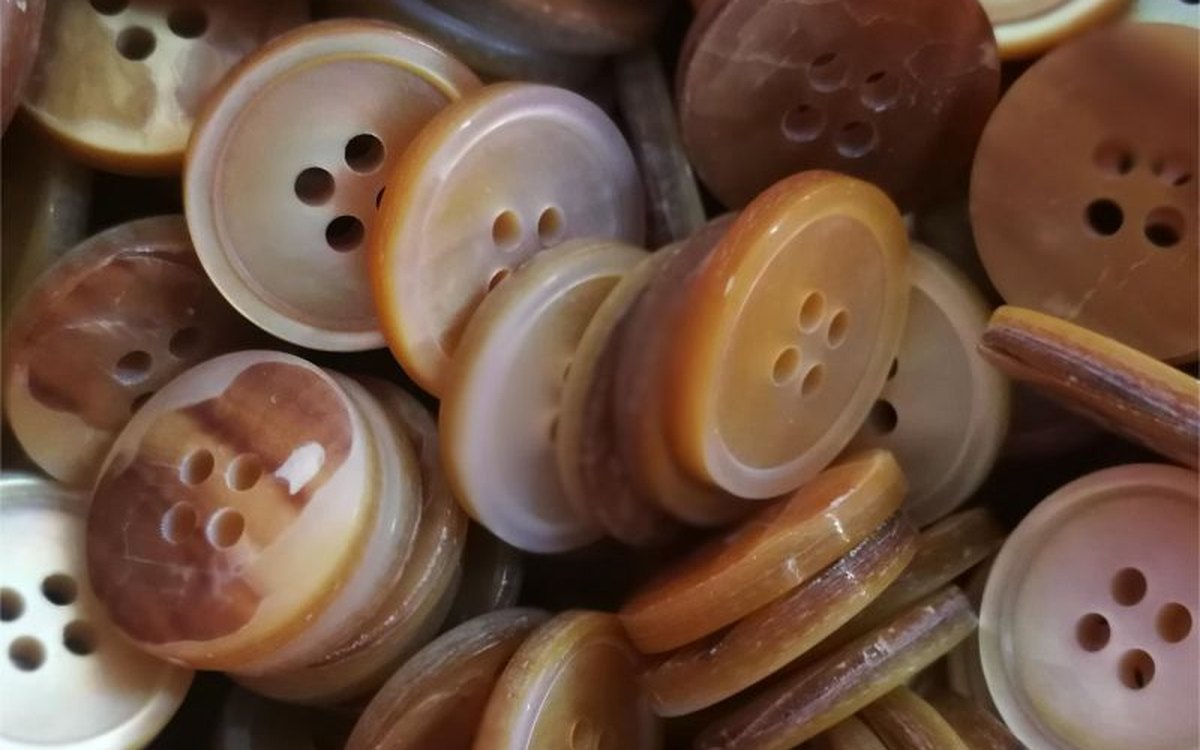
Mother of pearl buttons have a long place in traditional dress. In Alpine Tracht they are found on blouses, festive shirts and knitted jackets; in many European regions they close the white shirts worn for holidays and weddings; and in London the Pearly Kings and Queens cover entire suits with them. What these garments share is a love of a bright, natural button that catches the light and lasts for generations of wear.
This article looks at the traditional garments most often associated with mother of pearl buttons, the button styles that suit them, and how to choose shell buttons when you make or restore traditional clothing today.
Traditional garments with mother of pearl buttons
| Garment | Typical buttons | Typical size |
|---|---|---|
| Dirndl blouse | Small white mother of pearl, 2- or 4-hole, sometimes shaped | 14L–18L (9–11.5 mm) |
| Tracht shirt (men's festive shirt) | White mother of pearl or trocas, 4-hole | 16L–18L |
| Knitted Tracht jacket | Shell or shank buttons, often with a carved or domed face | 24L–28L |
| Festive waistcoat | Domed or shank shell buttons | 20L–24L |
| Children's festive wear | Small white 2-hole buttons | 14L–18L |
| Pearly King and Queen suits | Hundreds of white mother of pearl buttons in patterns | Many sizes mixed |
Dirndl blouses and Tracht shirts
The white blouse worn under a dirndl is often fastened with small mother of pearl buttons. Their soft white lustre suits fine cotton and lace, and the small size keeps the front delicate. Flower-shaped or carved shell buttons are a popular decorative choice for festive blouses, while plain 2-hole buttons suit everyday ones.
Men's Tracht shirts – in linen or cotton, often with a stand collar or small collar – are traditionally closed with white mother of pearl or trocas buttons in 16L–18L. On checked or coloured shirting, the natural shell tone stays calm and works with almost any pattern. For sizes and positions on a shirt, see our guide to mother of pearl shirt buttons.

Knitted jackets and waistcoats
Knitted Tracht jackets and festive waistcoats carry larger buttons, and here many makers use horn, metal or shell side by side. Shell works especially well on light and natural-coloured knitwear, where a domed or shank button sits on top of the thick knit. Carved faces, sunburst rims and flower shapes give a traditional, handcrafted character. Our articles on shank shell buttons and shaped shell buttons show the options.
The Pearly Kings and Queens of London
The best-known traditional costume with mother of pearl buttons comes from London. The Pearly Kings and Queens are a charitable tradition that grew out of the city's market traders in the late nineteenth century. Its founder, Henry Croft, is remembered for covering a suit with pearl buttons to attract attention when collecting money for charity, and families have kept the tradition alive ever since.
A pearly suit can carry many hundreds of white mother of pearl buttons, sewn into patterns such as stars, hearts, flowers, horseshoes and words. The buttons are usually mixed in size and shape, so the costume sparkles as the wearer moves. It is a wonderful example of how much character natural shell buttons can bring to a garment.
Festive and ceremonial wear
Across Europe, white shirts and blouses for weddings, christenings and holidays are often fastened with mother of pearl. Many families keep such garments and pass them on, and the buttons are part of that story. When an old garment is restored, a new shell button in a similar size and tone keeps the original look. Our guide to vintage mother of pearl buttons explains how to identify old buttons and combine them with new ones.

Choosing shell buttons for traditional clothing
- Blouses and shirts: white mother of pearl or akoya in 14L–18L, 2- or 4-hole. Flower or carved shapes for festive pieces.
- Men's shirts: white mother of pearl or trocas in 16L–18L, 4-hole.
- Knitwear and waistcoats: domed, rim or shank shell buttons in 20L–28L; brown and smoked tones suit loden and dark knits.
- Decorative work: mixed sizes of white mother of pearl, flat 2- or 4-hole, for patterns and embroidery-style designs.
Shell buttons on traditional clothes are best washed on a gentle cycle and ironed around the buttons. Our care guide has the details.
Ordering for traditional wear
Polkom produces white, yellow, brown, black and smoked mother of pearl, trocas, akoya and river shell buttons in 2-hole, 4-hole and shank styles, as well as carved and shaped designs. For Tracht makers and costume workshops we recommend samples first, so you can see the tone on your fabric. Wholesale orders start from 100 pieces.
FAQ
What is traditionally decorated with mother of pearl buttons?
Dirndl blouses, Tracht shirts, festive waistcoats and knitwear, white ceremonial shirts and, most famously, the suits of London's Pearly Kings and Queens.
Who are the Pearly Kings and Queens?
A London charitable tradition from the late nineteenth century whose members wear clothes covered with mother of pearl buttons sewn in patterns.
Which button size suits a dirndl blouse?
Usually small buttons of 14L–18L, about 9–11.5 mm, in white mother of pearl.
Can I replace old buttons on a traditional garment with new shell buttons?
Yes. Choose the same size and a similar tone; new mother of pearl buttons blend well with the original look.
Shell buttons for traditional dress
Explore our mother of pearl buttons and request samples through the wholesale page.
Related guides
 Gold-Lip and Yellow Mother of Pearl Buttons: Warm Natural Nacre
Yellow and gold-lip mother of pearl buttons bring natural warmth to linen, camel and autumn palettes. How they are cut, sorted and used.
Read →
 Black-Lip Mother of Pearl Buttons: Dark Lustre for Shirts, Knitwear and Coats
Black-lip mother of pearl comes from the dark rim of the black-lip pearl oyster. A guide to its colours, best garments and ordering.
Read →
 Shell Buttons for Sewing: How to Choose and Buy Them Online
A practical buyer's guide to genuine shell buttons for sewing: what to check in a listing, the right shell and size for each project,...
Read →
