
Natural Colour Variation in Shell Buttons: Sorting, Grading and Matching
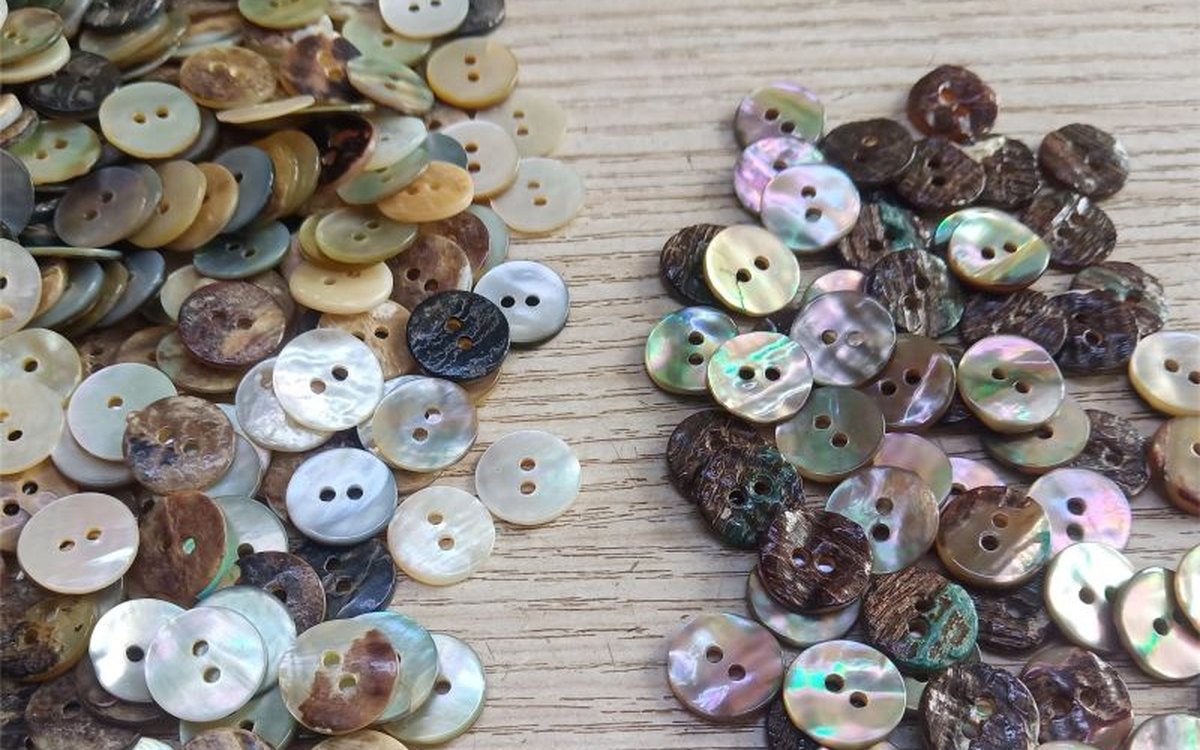
Every shell grows differently, so no two mother of pearl buttons are identical. Small differences in tone, lustre and pattern are part of the beauty of natural shell. For a brand, the question is not how to remove that variation, but how to manage it so every garment looks harmonious and repeat orders stay close to the first. This guide explains where variation comes from and how it is handled.

Where variation comes from
- Species – each shell family has its own base colour range.
- Zone of the shell – the centre, edge and lip of one shell can differ strongly; see gold-lip and black-lip mother of pearl.
- Growth – water, season and age change the layers of nacre.
- Light – iridescence changes with the viewing angle, so two identical buttons can look different side by side.
Sorting and grading
Sorting by tone
After polishing, buttons are sorted by colour into tone groups. For white mother of pearl, this means separating bright white, creamy and greyish pieces; for abalone, it means sorting by dominant colour and pattern.
Grading by surface
Grades describe surface quality – how clean, even and free of marks the face is. Higher grades suit fine shirts and blouses; lower grades with more natural character suit casual garments and knitwear. Grade T2 akoya, for example, is recommended for shirts and blouses. Our article on quality checks explains inspection in detail.
Managing variation in a collection
- Approve a physical sample and keep it as the reference.
- Order all sizes for one garment from the same lot.
- Pack buttons by garment set where possible, so one shirt receives buttons from one tone group.
- Choose smoked or sprayed colours when a very uniform look is required; see coloured shell buttons.
- Choose a satin or matte finish to soften visible differences; see shell button finishes.
Repeat orders
Polkom keeps the approved sample for each style and sorts new lots against it. Repeat orders therefore stay close in tone, while a small natural difference between lots remains part of the material. If two lots must be used on the same garment run, tell us in advance so we can sort them together.
Explaining variation to customers
Many brands mention natural variation on their product pages or hangtags, as a mark of a genuine material. A short line such as "each button is cut from natural shell and may vary slightly in tone" sets the right expectation.
Ordering
Samples usually take 10–20 days, and wholesale orders start from 100 pieces (10 pieces in our online shop). Browse shell button sets or start via the wholesale page.
FAQ
Why do my shell buttons look slightly different?
Natural shell varies in tone and pattern, and iridescence changes with the light. Sorting keeps the variation harmonious.
Can you guarantee identical colour on reorders?
We sort new lots against the approved reference, so repeats stay close. A small natural difference remains.
Which option gives the most uniform look?
Smoked or sprayed colours and a satin or matte finish give the most even appearance.
Related guides
 What Colour Is Mother of Pearl? Nacre Shades from White to Black
Mother of pearl is best known as iridescent white, yet nacre ranges from cream and gold to grey, black and peacock. The natural colours...
Read →
 Mother of Pearl Button Jewellery and Crafts: Earrings, Bracelets and More
How to make earrings, bracelets, necklaces, brooches and cards with mother of pearl buttons – which sizes and shells to choose and how to...
Read →
 Mother of Pearl in Musical Instruments: Saxophone Keys, Guitar Inlays and Bows
From saxophone key touches to guitar inlays and violin bow frogs: where mother of pearl and abalone appear on musical instruments and how the...
Read →
