
Shell Buttons for Cardigans and Knitwear
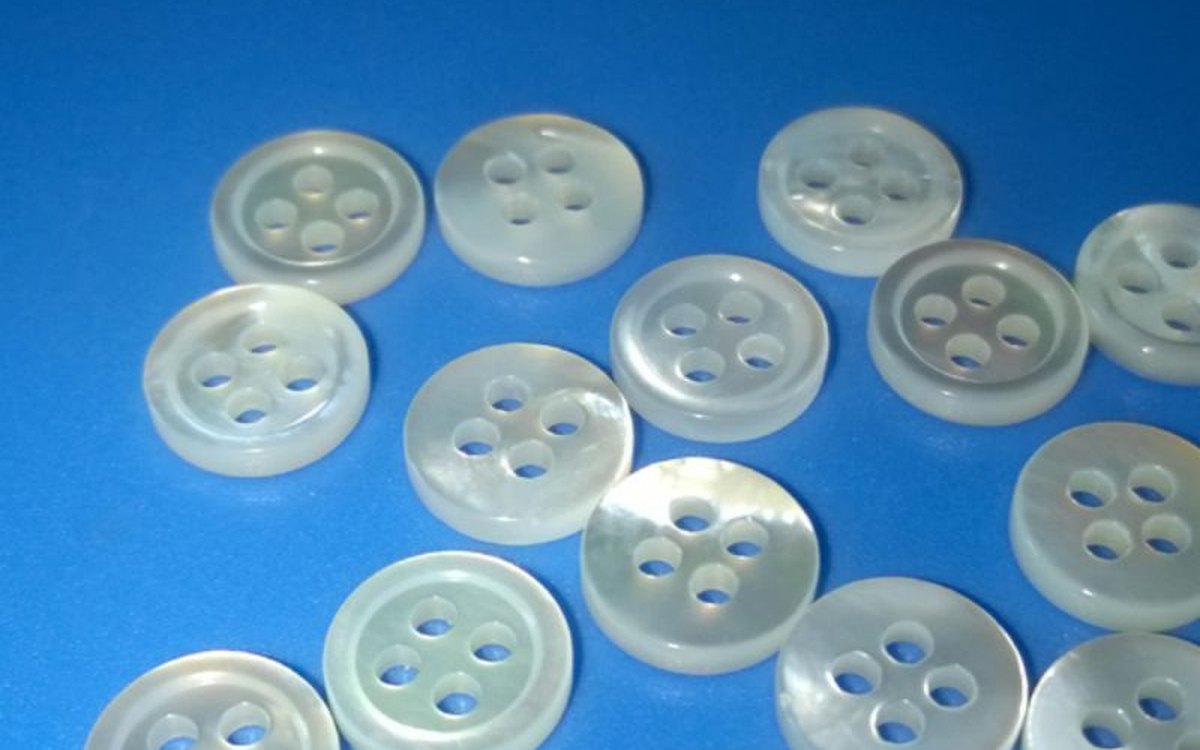
Shell buttons for cardigans are usually chosen in sizes between 20L and 28L (about 12.5–18 mm), with fine-gauge knits leaning towards the smaller end and chunky knits towards the larger. Mother of pearl, river shell and trocas are the most popular shells for knitwear, and both 2-hole and 4-hole styles work well, as long as the button is sewn on with a little thread shank and some support behind the knit.
A cardigan is one of the few garments where the buttons are always on show. They sit on soft, textured yarn, catch the light every time the wearer moves and are handled many times a day. That is why genuine shell buttons are such a natural match for knitwear: the cool, smooth surface and gentle lustre of shell add a quiet touch of luxury to wool, cotton, cashmere and merino. Below we look at sizes, hole styles, sewing and colour so you can choose the right mother of pearl buttons for a cardigan.
Why shell suits knitwear so well
Knitwear is all about texture, and shell brings a contrasting texture of its own: hard, polished and luminous against the softness of the yarn. Each button is cut from natural nacre, so it has a slight variation in tone and a play of colour that changes with the light. On a plain knit, a row of shell buttons becomes a design detail rather than a simple fastening.
Shell also has a pleasant weight. It helps the button band hang straight and gives the cardigan a quality feel the moment someone fastens it. Made from cultured ocean and river shells, they also give brands a clear, natural origin to describe on hang tags.
Which size shell buttons for a cardigan?
Button size depends on the yarn weight, the width of the button band and the look you want. Buttons are measured in lignes (1 ligne ≈ 0.635 mm). As a general guide:
| Cardigan type | Typical shell button size |
|---|---|
| Fine-gauge cotton, silk blend or baby knit | 14L–18L (about 9–11.5 mm) |
| Classic merino or cashmere cardigan | 18L–24L (about 11.5–15 mm) |
| Medium-weight wool or cotton knit | 24L–28L (about 15–18 mm) |
| Chunky knit, cardigan coat or shawl-collar cardigan | 28L–40L (about 18–25 mm) |
| Knitted waistcoat or vest | 18L–24L (about 11.5–15 mm) |
A useful rule: the button should be wide enough to stay securely in the buttonhole of a stretchy knit, but not so wide that it pulls the band out of shape. Always test on a knitted swatch with the real buttonhole. For a complete ligne-to-millimetre overview, see our shell button size chart.
2 holes or 4 holes?
Both styles look beautiful on knitwear, and the choice is mostly about character and function.
- 4-hole shell buttons distribute the thread over four points, so they sit very flat and stable on the button band. They are a classic choice for cardigans that are fastened and unfastened often, and for heavier knits where the button carries more load.
- 2-hole shell buttons leave more of the shell surface visible, which shows off the lustre of white mother of pearl, akoya or abalone. They give a lighter, more delicate look that suits fine knits, summer cardigans and feminine styles.
- Shank buttons (on request) lift the button above thick yarn, so the buttonhole closes neatly around it. They can be a good option for very chunky knits.
Profile matters too. Flat buttons look modern and minimal, rim buttons frame the holes with a raised edge and feel more traditional, while dome buttons add depth and catch the light on their curve. Our knitwear shell buttons collection brings together styles that work well on cardigans.
How to sew shell buttons onto a knit
Knitted fabric stretches, so a button sewn tightly straight onto the yarn can pull, distort the band or eventually loosen. A few simple techniques keep shell buttons secure and the cardigan looking neat:
- Reinforce the band. Many knitwear makers sew a strip of grosgrain or cotton tape behind the button band, or use a small clear or flat stay button on the inside. This spreads the tension and protects the knit.
- Make a thread shank. Leave a little space between the button and the knit, then wind the thread several times around the stitches under the button. The shank gives room for the thickness of the opposite band.
- Choose suitable thread. A strong polyester or cotton-wrapped thread in a matching colour holds well. For hand-knits, some makers use a split strand of the knitting yarn for a seamless look.
- Do not overtighten. Firm, even stitches are enough. Very tight stitches can pinch the yarn and press the thread hard against the edge of the holes.
- Check the buttonhole. Knitted buttonholes relax with wear, so test with the real button and make the hole slightly snug rather than generous.
Colour ideas for cardigan buttons
Natural shell tones combine easily with knitwear colours. A few pairings that often work well:
- White mother of pearl on navy, cream, pastel and red cardigans for a crisp, classic look.
- Black mother of pearl on charcoal, grey, black and deep green knits, where its dark peacock shades add depth.
- Yellow or brown mother of pearl on camel, oatmeal, rust and chocolate tones for a warm, autumnal feel.
- Trocas on natural, undyed and rustic yarns, where its creamy colour and organic pattern echo the texture of the wool.
- River shell on everyday cotton cardigans; its clean white top is also a good base for sprayed colours when you want a custom match.
- Abalone as a statement on plain black, white or jewel-tone knits.
If you need a specific shade, sprayed colours matched to a Pantone reference are available on request, and samples let you compare the button against your actual yarn before production.
Seasonal choices
For spring and summer collections, light cardigans in cotton, linen blends or silk usually look best with smaller, finer buttons: white mother of pearl, akoya or 2-hole river shell in 16L–20L. These keep the garment light and fresh.
For autumn and winter, heavier knits can carry larger buttons with more presence. Trocas, brown mother of pearl and black mother of pearl in 24L–32L bring warmth and weight, and a rim profile adds a cosy, traditional character. Long cardigan coats can go up to 36L or 40L for a confident finish.
Caring for a cardigan with shell buttons
Shell buttons cope well with gentle knitwear care. Wash the cardigan on a wool or delicate programme, or by hand in lukewarm water with a mild detergent, and dry it flat. Fastening the buttons and turning the garment inside out before washing helps protect the shell surface. When steaming or ironing, avoid pressing directly on the buttons. Our guide on how to care for shell buttons covers washing, ironing and dry cleaning in more detail.
FAQ
What size buttons are best for a cardigan?
Most cardigans use buttons between 20L and 28L (about 12.5–18 mm). Fine knits often suit 16L–20L, while chunky knits and cardigan coats can use 28L–40L. Test the size on a swatch with the real buttonhole.
Are mother of pearl buttons good for cardigans?
Yes. Mother of pearl buttons for cardigans are a timeless choice: their lustre lifts plain knits, their weight helps the band hang straight, and they are available in white, yellow, black and brown to match many yarn colours.
Should I use 2-hole or 4-hole buttons on knitwear?
Both work. 4-hole buttons sit flatter and very stable, which suits cardigans worn and fastened every day. 2-hole buttons show more of the shell and give a lighter, more delicate look.
How do I stop buttons pulling on a knitted cardigan?
Reinforce the band with tape or a small stay button on the inside, sew with a thread shank, and avoid very tight stitches. This spreads the tension and keeps the knit in shape.
Can I get shell buttons for knitwear in custom colours?
Yes. Natural shell tones cover many knitwear shades, and sprayed colours are available on request. We send samples first so you can match them to your yarn.
Finish your knitwear with shell
The right shell buttons turn a good cardigan into a garment people remember. Knitwear brands and factories can request samples and a price offer on our wholesale page, and designers and hand-knitters can order smaller quantities in our online shop.
Related guides
 Mother of Pearl Buttons by Size: 10 mm, 12 mm, 15 mm, 20 mm and 25 mm
A size-by-size guide to mother of pearl buttons in millimetres – 10, 11.5, 12.7, 15, 18, 20, 23 and 25 mm – with typical...
Read →
 Kissing Buttons: How Suit Sleeve Buttons Are Arranged
Kissing buttons are sleeve buttons placed edge to edge. A tailor's guide to sleeve button count, size, spacing, stacked cuffs and shell buttons.
Read →
 Trocas and Mother of Pearl Buttons for Suits and Shirts: Finishes, Colours and Sizes
A practical guide for tailors and shirt makers: shiny, matt, lacquered and laser-engraved trocas and mother of pearl buttons, rimmed and bowl profiles, and...
Read →
