
What Is Australian Mother of Pearl?
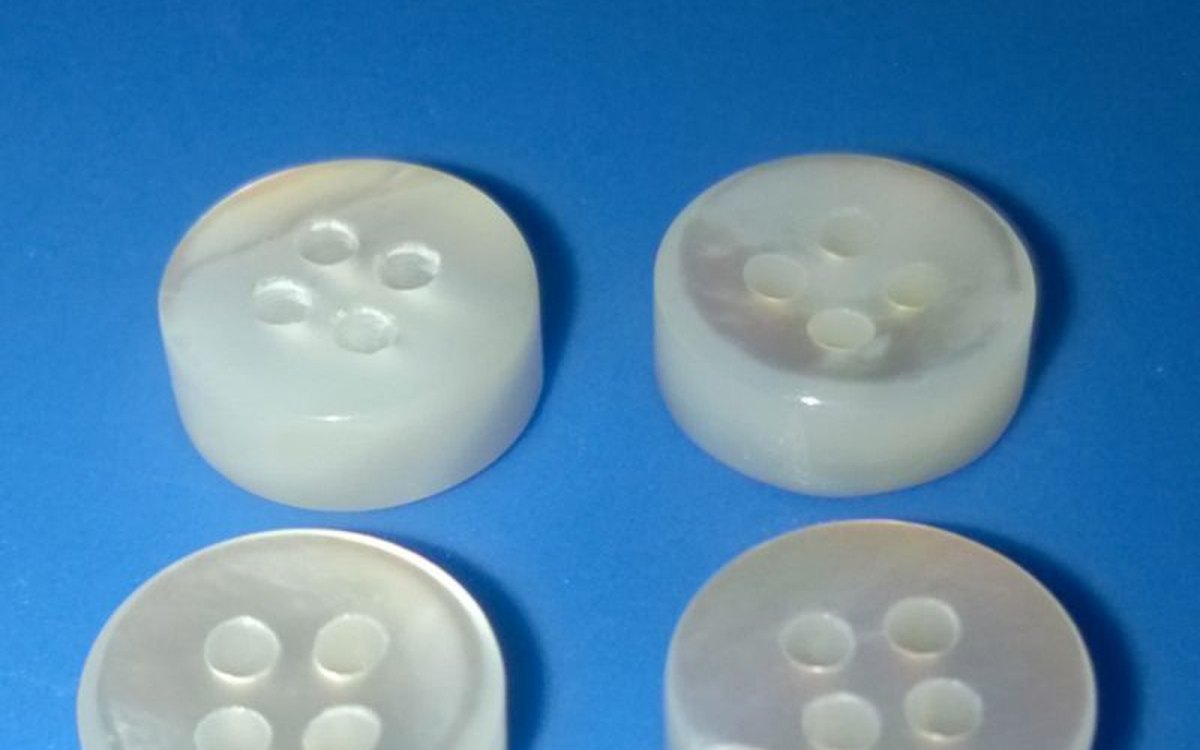
Australian mother of pearl is the trade name for the shell of Pinctada maxima, the large pearl oyster farmed for South Sea pearls. It comes in two natural forms: silver-lip, with a very white, bright, silvery nacre, and gold-lip, with a warm golden edge. Because the shell is big and thick, it yields thick, flawless-looking white buttons, which is why Australian MOP is the reference shell for premium shirt buttons.
The name points to the shell's most famous farming region, the warm waters off northern Australia, but in the button trade "Australian MOP" usually describes the species and its look rather than a single country. Pinctada maxima is also farmed in the Philippines and Indonesia. Our white and yellow mother of pearl comes from farms in Australia, the Philippines or Indonesia, all ocean shells and all cultured.
The shell behind the name
Pinctada maxima is the largest of the pearl oysters. It grows in warm, clean tropical seas, where it lays down layer after layer of nacre on the inside of its shell. Pearl farms raise the oysters for their pearls, and once the harvest is complete, the shell becomes a valuable raw material. Every Australian mother of pearl button is therefore a by-product of cultured pearl farming, and button making gives the whole shell a second life.
The size of the shell matters for buttons. A large, thick shell allows cutters to take blanks from the cleanest areas of nacre and to produce thick buttons, including the tall shirt buttons favoured by fine shirtmakers. It also yields larger diameters for jackets and coats with an even, bright face.
Silver-lip and gold-lip
| Form | Look | Button colours | Typical use |
|---|---|---|---|
| Silver-lip | Very white, bright, silvery lustre with a clean, cool tone | White MOP, white on both sides or with skin back | Dress shirts, bridal wear, white linen, summer tailoring |
| Gold-lip | Warm golden to honey edge around a white centre | Yellow MOP and warm white | Knitwear, cream and camel garments, warm-toned tailoring |
A single shell often has a white centre and a coloured rim, so careful cutting and sorting separate the pure white pieces from the golden ones. Pure white buttons that are white on both sides, with no natural skin on the back, are the most precious version of white mother of pearl.
What makes Australian MOP special
Whiteness
Silver-lip nacre is among the whitest shell available for buttons. The colour is clean and bright, with soft silver iridescence rather than strong rainbow colours. On a white shirt, it reads as pure white that glows a little when the light moves.
Lustre with depth
The thick layers of nacre give the polished surface a sense of depth. Look at the edge of a thick button and you can see the fine layered structure that creates this glow.
Thickness
Thick shell means room for thicker buttons. Besides the standard thickness of about 1.5–2.0 mm, thicker shirt buttons on request, rimmed jacket buttons and substantial coat buttons can all be cut cleanly. Our thickness guide explains which values suit which garment.
Consistency
Large shells with even nacre make it easier to sort harmonious batches of white buttons, which matters for shirt programmes where many garments should look the same. As with every natural shell, small differences remain, and they are part of the charm.
Australian MOP in premium shirts
Fine shirtmaking is where Australian mother of pearl is most at home. A premium white or light blue dress shirt typically uses 18L buttons on the front, 16L–14L on the collar and cuffs, in a thicker gauge that stands proudly on the placket. The white, white-backed versions look equally refined when the cuff is turned or the shirt is worn open. For more on shirt specifications, see our guide to mother of pearl shirt buttons.
Beyond shirts, Australian MOP suits bridal gowns, christening wear, white linen jackets, summer suits and any garment where a bright, pure white finish is the goal. Gold-lip yellow tones bring warmth to knitwear and to cream or camel garments.
Sizes, styles and finishing
White and yellow mother of pearl is produced from about 12L to 40L (≈7.5–25 mm), with a standard thickness of about 1.5–2.0 mm and thicker buttons on request. Options include:
- Style: flat 2-hole and rim 4-hole are the popular styles; dome profiles, fancy shapes and shank buttons, including a self shank carved from the shell, on request.
- Back: white on both sides with no skin, or white top with the natural skin on the back.
- Colour: white/white, white/yellow, smoked grey and smoked brown, plus sprayed colours on the top side matched to a Pantone reference on request.
- Branding: logo laser engraving, which shows as a fine, matt mark on the bright white face.
We produce samples before bulk so you can approve whiteness, thickness and finish on your own fabric.
Australian MOP within the mother of pearl family
Mother of pearl is a family of shells, each with its own personality. Australian MOP provides the brightest whites and the warm yellows. Black mother of pearl from Tahiti, the black-lip oyster, provides deep charcoal, grey and smoke tones, described in our article on black and smoked mother of pearl. Akoya, a smaller and thinner pearl oyster from Japan, provides a delicate pink-silver glow. For the basics of nacre and all four natural MOP colours, read what is mother of pearl.
How to recognise Australian mother of pearl
- A clean, bright white face with soft silvery iridescence.
- A cool touch and a pleasing weight, typical of thick genuine shell.
- Visible fine layers along a polished edge.
- On white-backed buttons, an equally white reverse; on skin-back styles, a natural, slightly textured back.
- Gentle natural variation within a batch, with no two buttons exactly alike.
Care
Australian MOP is robust, especially in thicker gauges, and is well suited to shirts that are washed often. Close the buttons before washing, use moderate temperatures, and iron around the buttons or from the reverse. Avoid bleach, which can dull the lustre. Our care guide has the details.
FAQ
What is Australian mother of pearl?
It is the shell of Pinctada maxima, the South Sea pearl oyster, known for very white silver-lip and warm gold-lip nacre.
Is Australian MOP only from Australia?
The name usually describes the species and look. Pinctada maxima is also farmed in the Philippines and Indonesia.
Why are Australian MOP buttons so white?
Silver-lip nacre is naturally very white and bright. Careful cutting from the cleanest part of the shell keeps that whiteness in the button.
Is Australian mother of pearl good for shirts?
Yes. It is a classic choice for premium dress shirts, especially in thick 4-hole styles.
What is the difference between silver-lip and gold-lip?
Silver-lip gives white buttons; gold-lip has a golden edge and gives yellow and warm white buttons.
Bring Australian MOP to your collection
See the full range on our mother of pearl buttons page. Request samples and a price offer on our wholesale page, or browse shell buttons in our online shop.
Related guides
 Mother of Pearl Snap Buttons: Pearl Snaps for Western Shirts
Pearl snaps explained: how mother of pearl snap buttons are made, where they appear on western shirts and how they compare with sew-on shell...
Read →
 Shirt Collar Styles: Which Collars Need Collar Stays and Buttons
A guide to shirt collar styles – point, spread, cutaway, button-down, wing, club and band – with the collar stays and shell buttons each...
Read →
 Trocas and Mother of Pearl Buttons for Suits and Shirts: Finishes, Colours and Sizes
A practical guide for tailors and shirt makers: shiny, matt, lacquered and laser-engraved trocas and mother of pearl buttons, rimmed and bowl profiles, and...
Read →
