
Luxury Suit and Jacket Buttons: Which Material to Choose
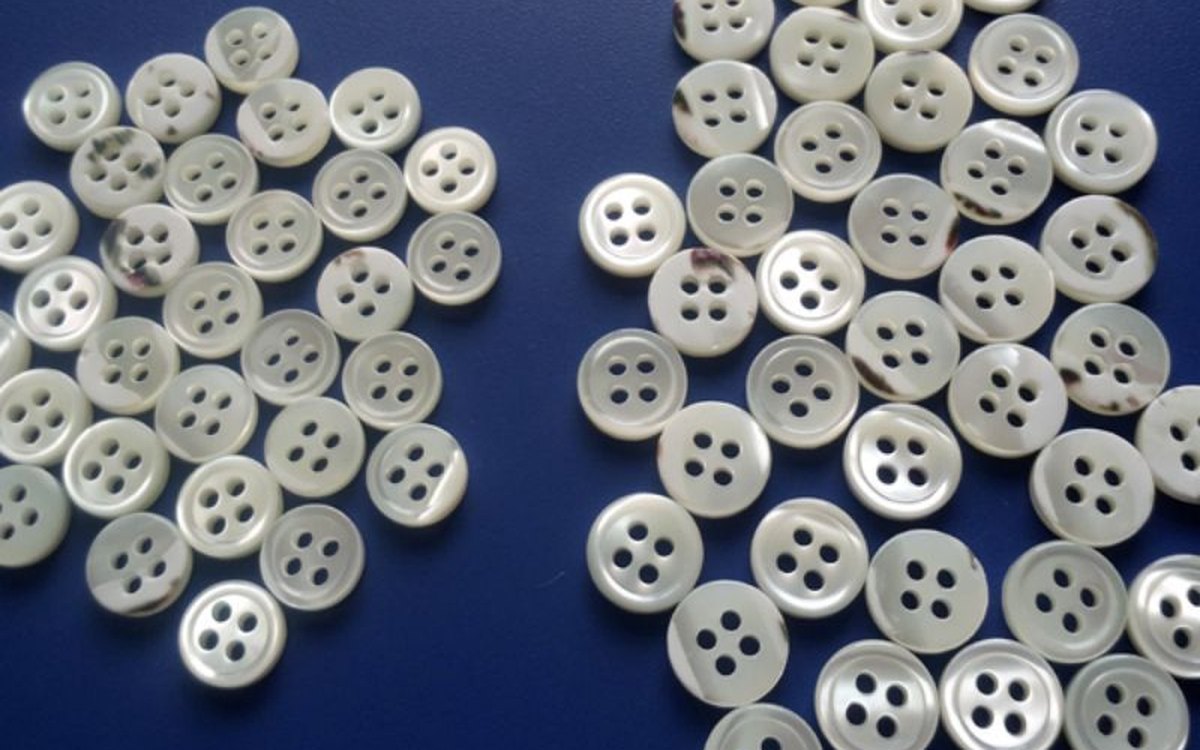
The most luxurious suit buttons are made from natural materials. For luxury suit buttons, fine tailoring typically relies on three: mother of pearl (genuine shell), horn and corozo. Tailors choose between them by fabric, season and formality rather than by price alone. Shell is widely regarded as one of the most luxurious button materials for summer suits, linen and cotton jackets, light-coloured tailoring, waistcoats and evening jackets, while horn and corozo are the classic partners for many wool suits in deeper, earthier tones.
So if you are asking which buttons a bespoke suit uses, the honest answer is: the natural material that suits that particular cloth. This guide explains when shell is the luxury choice, where horn and corozo shine, what makes a suit button feel truly fine in the hand, the typical front and cuff sizes, and how to match button colour to navy, grey, beige and black-tie fabrics.
Three natural materials of fine tailoring
| Material | Character | Where it shines |
|---|---|---|
| Mother of pearl and other shell | Cool, weighty, with a soft natural lustre that moves with the light | Summer suits, linen and cotton, light colours, evening jackets, waistcoats, double-breasted blazers |
| Horn | Warm, organic markings; every button individually patterned | Wool and flannel suits, tweed, country tailoring, overcoats |
| Corozo | Fine, dense texture from the tagua nut; takes colour well for close matching | Business suits in wool, matched tonal buttons, sports jackets |
If you are deciding between two, our comparisons of shell vs horn buttons and shell vs corozo buttons go into detail. Here we focus on the question that matters most for a luxury suit: when shell is the right answer.
When shell is the luxury choice for a suit
Summer suits in linen, cotton and tropical wool
Warm-weather tailoring is where mother of pearl suit buttons feel most at home. Linen, cotton drill, seersucker, fresco and tropical wool have a light, airy surface, and the natural shimmer of white mother of pearl or trocas echoes that freshness.
Light-coloured tailoring
Ivory, sand, pale grey, sky blue and soft olive cloths all welcome shell. White and yellow mother of pearl bring a gentle highlight, while smoked or grey shell gives a quieter, tonal finish on mid-grey or taupe.
Evening jackets and waistcoats
For evening, black mother of pearl from Tahiti shows deep charcoal with flashes of green and violet, a subtle glamour that reads beautifully under evening light. On a white or ivory dinner jacket, white mother of pearl is a refined match. Waistcoats are another natural home for shell: the buttons sit close to the shirt and tie, where their lustre is seen up close.
Double-breasted blazers
A double-breasted blazer carries six front buttons, so the buttons become part of the jacket's architecture. Dark shell on a navy blazer, or white shell on a cream one, turns that grid of buttons into a quiet signature.
For a wider look at why shell holds this place in fine dressing, read our article on luxury shell buttons.
What makes a suit button feel luxurious
Two luxury suit buttons in the same material can still feel very different. Tailors look at:
- Thickness. A suit button should feel substantial between the fingers. Jacket fronts are typically noticeably thicker than shirt buttons, which gives a solid, quality feel every time the jacket is fastened.
- Profile. A rim button, with a raised edge and dished centre, is the traditional tailoring shape and frames the holes neatly. A soft dome catches more light and feels smooth; a flat profile looks modern and clean on unstructured jackets.
- Polished back. On cuffs, the reverse of a button can show when the sleeve moves. A back polished as carefully as the face is a hallmark of a premium button.
- Matching front and cuff buttons. The front and cuff sizes should come from the same style, shell and colour sort, so the jacket reads as one harmonious set.
- Sorted tone. Natural shell varies from button to button. Careful sorting gives a set that looks consistent while each button keeps its own natural pattern.
4-hole or shank on a suit?
The 4-hole shell button is the classic choice for suit fronts and cuffs. It is sewn with a thread stem: the tailor leaves space between button and cloth and wraps the thread several times beneath the button, so the button stands up to the thickness of the front edge and the buttonhole closes without pulling. Parallel bars give a clean business look; a cross or a hand-sewn crow's foot adds a bespoke touch.
A shank shell button has a loop on the back, so the face shows nothing but shell. On an evening jacket, a women's suit or a couture waistcoat, it gives a polished, jewellery-like effect. The shank already lifts the button off the cloth, so only a short thread stem is needed. Flat 2-hole buttons are less common on suits but can suit unstructured jackets and women's tailoring.
Typical suit button sizes
Sizes are given in ligne (L). These are the proportions most tailors work with, within our typical range of 12L–40L (about 8–25 mm), which depends on the shell:
| Position | Typical size |
|---|---|
| Jacket front, single- or double-breasted | 30L–32L (about 19–20 mm) |
| Jacket cuffs | 24L (about 15 mm) |
| Waistcoat front | 24L (about 15 mm) |
| Trouser waistband, back pocket and brace buttons | 18L–24L (about 11.5–15 mm) |
| Overcoat front | 36L–40L (about 23–25 mm) |
A lighter, softer jacket can take a slightly smaller front button, and a casual overshirt-style jacket a larger one. Our guide to shell buttons for jackets and blazers covers button counts per jacket style, and the shell button size chart converts every ligne size to millimetres.
Matching button colour to the suit
| Suit fabric | Natural button suggestions |
|---|---|
| Navy worsted or navy blazer | Black or smoked mother of pearl; dark horn; navy corozo |
| Mid and charcoal grey | Grey or smoked mother of pearl; grey or black horn; grey corozo |
| Beige, sand, stone, cream | White, yellow or brown mother of pearl; trocas; light horn |
| Light blue, seersucker | White mother of pearl or river shell |
| Brown, olive, tweed | Brown or smoked mother of pearl; brown horn; brown corozo |
| Black tie (dinner jacket) | Fabric-covered buttons to match the lapel facings, or black mother of pearl; white shell on an ivory dinner jacket |
A useful rule: tonal buttons look formal and discreet, while a gentle contrast, such as white shell on sand linen, looks relaxed and summery. For grey suiting specifically, our article on grey mother of pearl buttons explains the natural, smoked and sprayed grey tones. When a shade must match exactly across a whole collection, a sprayed colour matched to a Pantone reference is possible on request.
Luxury suit buttons for brands and tailors
In bespoke tailoring, customers often choose from a card of natural buttons, and many tailors keep shell for summer cloths and evening commissions. For brands, a small laser-engraved logo on the front button adds a discreet signature. We always produce samples before bulk, so you can judge shell, thickness and colour on your own cloth. For care, ask the dry cleaner to protect the buttons when pressing.
FAQ
What buttons do bespoke suits use?
Bespoke suits typically use natural buttons: mother of pearl, horn or corozo. The tailor chooses by cloth and season, often shell for summer and evening suits, horn or corozo for many wool suits.
Are mother of pearl buttons good for a suit?
Yes. They are a classic luxury choice for linen, cotton and tropical wool suits, light colours, waistcoats and evening jackets, and in dark tones they also suit navy and grey.
What size are suit jacket buttons?
Typically about 20 mm (32L) on the front and about 15 mm (24L) on the cuffs, with 24L also common for waistcoats.
Should suit buttons match on the front and cuffs?
Yes. Front and cuff buttons are normally the same material, colour and style in two sizes, so the jacket reads as one set.
Which shell button suits a navy suit?
Black or smoked mother of pearl gives a refined, tonal look; white mother of pearl suits a navy summer blazer.
Finish your suits with natural shell
Browse front and cuff sizes in our suit shell buttons collection or the full online shop. Tailors and brands planning a collection can request samples and a price offer on our wholesale page.
Related guides
 Shell Buttons for Coats: Sizes, Thickness and Shells for Outerwear
A guide to mother of pearl and shell buttons for coats and outerwear – sizes, thickness, shank or 4-hole, which shells suit which coats,...
Read →
 Mother of Pearl Buttons by Size: 10 mm, 12 mm, 15 mm, 20 mm and 25 mm
A size-by-size guide to mother of pearl buttons in millimetres – 10, 11.5, 12.7, 15, 18, 20, 23 and 25 mm – with typical...
Read →
 Kissing Buttons: How Suit Sleeve Buttons Are Arranged
Kissing buttons are sleeve buttons placed edge to edge. A tailor's guide to sleeve button count, size, spacing, stacked cuffs and shell buttons.
Read →
