
Shell or Horn Buttons? How to Choose for Suits, Jackets and Shirts
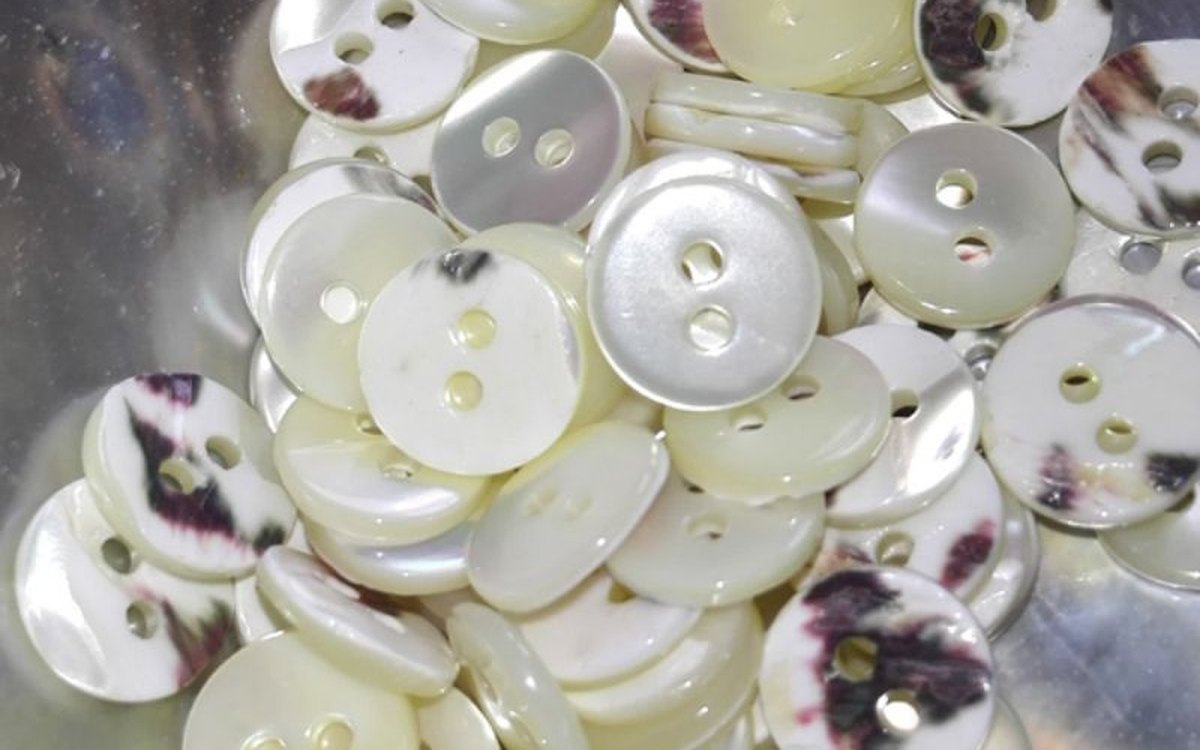
Shell or horn buttons? Both are natural, both are classics, and the right choice depends mainly on the garment. Choose shell buttons when you want lustre, light tones and a cool, polished finish: they are the traditional button for dress shirts and blouses, and they bring a bright, elegant accent to summer suits, linen and cotton jackets, evening wear and fine knitwear. Choose horn buttons when you want warm, marbled browns, honeys and blacks with a soft sheen: horn is the classic tailoring button for wool suits, tweed jackets and overcoats.
In short, for a suit or jacket, horn is the traditional all-season choice and shell is the lighter, more luminous option for warm-weather fabrics and dressier looks. For a shirt, shell is the established standard. Many tailors and brands use both in one wardrobe: horn on the coat and jacket, shell on the shirt underneath. Below we compare horn vs mother of pearl buttons in detail, by look, colour, feel, garment and care.
Shell vs horn buttons at a glance
| Feature | Shell buttons | Horn buttons |
|---|---|---|
| Material | Nacre (mother of pearl) cut from cultured ocean and river shells | Animal horn, typically water buffalo or cattle, usually a by-product of farming |
| Look | Iridescent lustre that changes with the light | Marbled, streaked pattern with depth and a soft sheen |
| Colour range | White, cream, yellow, silver-grey, black, brown, smoked tones and colourful abalone; sprayed colours possible | Cream, honey, amber, mid and dark brown, near-black; often several tones in one button |
| Feel | Cool to the touch, smooth and dense | Warm to the touch, smooth and solid |
| Typical garments | Dress shirts, blouses, polos, knitwear, summer suits, evening and bridal wear | Wool suits, sports jackets, tweeds, overcoats, trousers |
| Mood | Bright, crisp, refined | Warm, heritage, understated |
| Care | Gentle washing and dry cleaning are generally fine; protect when ironing | Usually dry cleaned with the garment; avoid long soaking and direct high heat |
What horn buttons are
Horn buttons are cut from animal horn, most often water buffalo or cattle horn that remains as a by-product of farming. Horn is made of keratin, so each piece has natural layers, streaks and translucent areas. After cutting, shaping and polishing, the button shows a marbled pattern in warm shades from pale cream to deep, almost black brown. Because the pattern runs through the material, no two horn buttons are identical, and a row of them on a jacket front has a gentle, natural variation.
Horn has long been associated with fine tailoring: its warm colours sit naturally against wool flannel, worsted and tweed, which is why it is so often the default button on classic suits and sports jackets.
What shell buttons are
Shell buttons are cut from the nacre, the inner layer of a shell. Nacre is built from extremely thin layers, and light reflecting between them creates the soft, shifting iridescence that people call mother of pearl lustre. The shells we use are all cultured, grown in pearl and shell farms in the ocean, or in the freshwater rivers of China for river shell. You can read more about the material in our guide What is mother of pearl?
Shell buttons are typically made from 12L to 40L (about 8 to 25 mm), depending on the shell, with 2 holes, 4 holes or a shank. White mother of pearl, akoya and trocas give light tones; black and smoked mother of pearl give deeper shades with the same glow.
Best buttons for a suit: shell or horn?
There is no single best button for a suit; there is the best button for the fabric, the season and the occasion. A useful way to decide:
- Autumn and winter suits in wool flannel, tweed or heavy worsted: horn is the classic choice. Its browns and blacks echo the depth of the cloth and match leather shoes, belts and bags.
- Spring and summer suits in linen, cotton, seersucker or light wool: shell buttons bring a fresh, bright finish. Cream, light grey or white mother of pearl on a stone, sand or light blue linen suit looks crisp and summery.
- Navy and charcoal business suits: both work well. Dark horn is understated; black or smoked mother of pearl adds a subtle glow that reads slightly dressier.
- Evening and ceremonial wear: shell is often chosen for dinner jackets, waistcoats and wedding suits, where a touch of lustre suits the occasion.
For more ideas on tailoring, see our article on shell buttons for jackets and blazers and our selection of suit shell buttons.
Shirts, jackets and coats: when each fits
Shirts and blouses
Shell is the traditional shirt button. Small 14L to 18L mother of pearl or trocas buttons sit flat on the placket, stay comfortable against the skin and look clean on white and pastel shirting. Horn appears on some casual and country shirts, flannel overshirts and workwear-inspired pieces, where its warm tones suit checks and heavier cotton. For details on shirt sizes and styles, read our guide to mother of pearl shirt buttons.
Jackets and blazers
Horn is the familiar choice on wool jackets and tweeds. Shell suits linen, cotton and silk blends, light-coloured blazers and dressier pieces. On a navy blazer, both are elegant: horn for a relaxed heritage look, smoked or black mother of pearl for a polished one.
Coats
Large horn buttons are a classic on overcoats and camel coats. Larger shell buttons, often with a shank, give spring and evening coats a refined, light-catching detail.
Season, fabric and colour
A simple rule of thumb: horn follows warm, deep, textured colours; shell follows light, cool and smooth ones. Horn harmonises with brown, olive, rust, camel and grey wool. Shell harmonises with white, cream, sky blue, pink, silver and pale stone, and its iridescence picks up the sheen of silk, satin and fine cotton.
Shell is also flexible on colour: natural tones range from bright white to black, and sprayed shades are possible on request. Both materials are strong and durable, and last for many years when sewn and cared for properly.
Care: washing, ironing and dry cleaning
Both materials are natural, so a little attention keeps them looking their best:
- Washing: shell buttons are generally fine in a gentle wash at moderate temperatures, ideally with the garment turned inside out. Horn buttons are usually on garments that are dry cleaned; long soaking in water is best avoided.
- Ironing: for both, avoid pressing the hot iron directly on the button. Iron around the buttons or press from the reverse side over a soft towel.
- Dry cleaning: both are generally fine. For valuable buttons, cleaners can cover or protect them during pressing.
Combining shell and horn in one collection
Shell and horn complement each other well. In a collection, horn can anchor autumn outerwear and suiting while shell carries shirts, knitwear and spring tailoring, giving the whole range a coherent, natural material story. For a wider overview, including corozo, coconut and wood, read our guide to natural button materials.
FAQ
Should I use shell or horn buttons on a suit?
Horn is the classic choice for wool suits in autumn and winter. Shell suits linen, cotton and lighter summer suits, as well as evening and wedding suits where a touch of lustre fits the occasion.
Are mother of pearl buttons more formal than horn?
Mother of pearl often reads slightly dressier because of its lustre, while horn reads warm and understated. Both are used on high-quality tailoring.
Can I use horn buttons on a dress shirt?
You can, especially on casual or country shirts. For classic dress shirts, small mother of pearl buttons are the traditional choice.
Do horn and shell buttons need special care?
Both benefit from avoiding direct contact with a hot iron. Shell handles gentle washing well; horn is best kept out of long soaking and is usually dry cleaned with the garment.
Can I mix shell and horn buttons in one outfit?
Yes. Horn on a jacket or coat with mother of pearl on the shirt underneath is a classic, harmonious combination.
Order shell buttons for your collection
We make genuine shell buttons from cultured shells in our Hong Kong factory, with our Polkom office in Sofia supporting European customers. Brands and garment makers can request samples and a price offer on our wholesale page, and designers, tailors and makers can order smaller quantities in our online shop.
Related guides
 Shell Buttons for Bags, Cushions and Home Textiles
Mother of pearl buttons for bags, cushion covers, bed linen and home textiles: sizes, styles and practical tips.
Read →
 Shell Buttons in Bespoke Tailoring: Sleeve Buttons, Working Cuffs and Kissing Buttons
How tailors use mother of pearl buttons on jacket sleeves, working cuffs and waistcoats, with sizes and placement notes.
Read →
 Gold-Lip and Yellow Mother of Pearl Buttons: Warm Natural Nacre
Yellow and gold-lip mother of pearl buttons bring natural warmth to linen, camel and autumn palettes. How they are cut, sorted and used.
Read →
