
What Is Akoya Shell? Akoya (Agoya) Buttons Explained
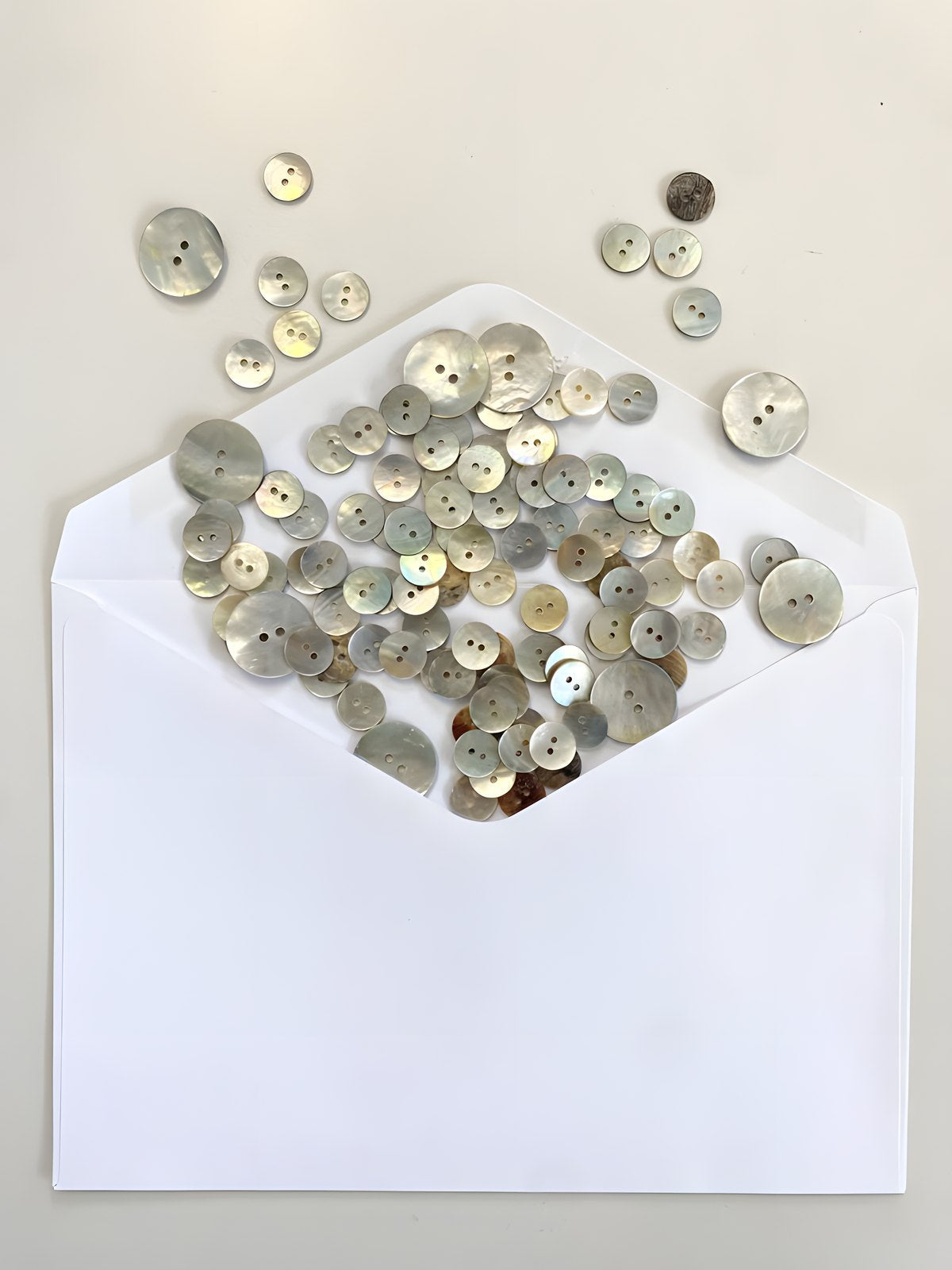
Akoya shell is the shell of the akoya pearl oyster, the small pearl oyster famous for classic Japanese pearls. Its inner layer of nacre is fine, smooth and softly luminous, with a white base and gentle reflections of pink and silver. When this nacre is cut and polished into buttons, the result is an akoya shell button: delicate, refined and quietly elegant.
In the button trade you will often see the spelling agoya instead of akoya. Both names describe the same shell. Agoya buttons are made with 2 holes only, round or in fancy shapes, in sizes from 14L to 40L, and grade T2 is the recommended choice. In this guide we explain where akoya shell comes from, how it looks, what the grades mean in practice and how to use akoya buttons in a collection.
Where akoya shell comes from
The akoya shells used for our buttons come from pearl farms in the ocean around Japan. Japan is the traditional home of akoya pearl culture, and the oysters there are grown in calm coastal waters where they slowly build up their nacre. Like all the shells we work with, akoya is cultured shell: grown in farms, with a clear origin and steady quality from one order to the next.
Pearl farming and button making fit naturally together. The pearl is the best-known product of the oyster, and the shell itself, with its beautiful lining of nacre, becomes a material for buttons, inlay and decorative work. Using the shell in this way makes the most of every oyster grown on the farm. For the wider picture of how each shell family is sourced, see our article on where shell buttons come from.
Akoya or agoya: one shell, two spellings
Search for these buttons and you will find both spellings, sometimes on the same supplier list. "Akoya" is the standard romanisation of the Japanese name and is the word most people know from pearls. "Agoya" is a variant used widely in the button and shell trade. When a factory, tailor or trim supplier writes "agoya buttons", they mean akoya shell buttons.
If you are writing product descriptions or hang tags, akoya is usually the clearer choice for consumers, because it connects directly to the familiar akoya pearl. For technical sheets and purchase orders, either spelling is understood.
What akoya shell buttons look like
The appeal of akoya is its subtlety. Where some shells are bold and colourful, akoya is soft and harmonious. Typical characteristics:
- Base colour: a clear, gentle white that sits comfortably next to white, ivory and pastel fabrics.
- Reflections: fine pink and silver tones that appear as the button moves, sometimes with a hint of soft green.
- Surface: smooth and even, with a refined, satin-like lustre after polishing.
- Character: light, delicate and elegant, ideal when the button should complement the garment rather than lead it.
As with every natural shell, each akoya button is slightly unique. Small variations in tone and lustre are a sign of genuine nacre and give a finished garment a warm, natural feel.
Akoya shell at a glance
| Feature | Akoya (agoya) shell |
|---|---|
| Source | Akoya pearl oyster, cultured in pearl farms |
| Origin | Ocean around Japan |
| Look | Soft white with pink and silver reflections |
| Typical style | Round or fancy shapes, 2 holes only (no 4 holes: the shell is thin) |
| Typical sizes | 14L to 40L (about 9 to 25 mm) |
| Colours | Natural, smoked grey, or sprayed colour on the top side |
| Popular grade | T2 (recommended) |
| Options | Laser engraved logos, sprayed colours on request, samples before bulk |
What does grade T2 mean?
Shell buttons are sorted into grades after polishing. Grading typically looks at how even the colour is, how bright the lustre is and how clean the surface appears. Higher grades show a more uniform look across the batch, while other grades keep more of the shell's natural variation.
For akoya, grade T2 is the one many customers choose. It offers the characteristic akoya glow with a pleasing consistency, which makes it a reliable option for shirts and blouses where a row of buttons should look harmonious. The best way to judge a grade is to see it on your own fabric, which is why we send samples before any bulk order. If a collection needs a particular look, we can show you more than one grade side by side.
Sizes for akoya buttons
Akoya buttons are made from 14L to 40L, always with 2 holes. Button sizes are measured in lignes, where one ligne is about 0.635 mm. Here is how the common sizes translate and where they are typically used:
| Ligne | Approx. diameter and typical use |
|---|---|
| 14L | About 9 mm: shirt collars, cuffs, blouses, children's wear |
| 16L | About 10 mm: shirt fronts, lingerie, light dresses |
| 18L | About 11.5 mm: shirts, blouses, fine knitwear |
| 20L–24L | About 12.5–15 mm: cardigans, dresses, light jackets |
| 28L–40L | About 18–25 mm: feature buttons, jackets, coats |
For a deeper look at measuring and choosing sizes, see our shell button size chart.
Where to use akoya shell buttons
Because of their soft lustre and delicate character, akoya buttons are especially loved for:
- Shirts and blouses: small flat 2-hole buttons give a clean, polished finish on fine cotton, poplin and silk.
- Lingerie and nightwear: a light, elegant button that feels pleasant against the skin.
- Children's wear: gentle colours that suit soft fabrics and pastel palettes.
- Light knitwear: fine-gauge cardigans and summer knits gain a quiet glow.
- Occasion and bridal pieces: the white and pink tones sit beautifully on ivory, blush and champagne fabrics.
Choosing akoya among other shells
Akoya is the choice when you want refinement and softness. White mother of pearl offers a brighter, more silvery white, red and gold abalone bring strong colour, river shell has a gentle iridescent shadow and is a favourite base for sprayed colours, and trocas offers a creamy, sturdy look for casual shirts. Many brands use akoya for lighter garments and pair it with mother of pearl elsewhere in the same collection. Our akoya shell buttons page covers the material in full detail, and you can browse finished buttons in the akoya shell buttons collection.
Akoya vs trocas shell buttons
Akoya and trocas are both genuine ocean shells lined with nacre, and both are found on fine shirts, so buyers often weigh one against the other. They come from very different animals. Akoya is the shell of the akoya pearl oyster, Pinctada fucata (the Japanese form is often listed as Pinctada fucata martensii), a small bivalve cultured for pearls. Trocas is the shell of the trochus, a cone-shaped sea snail now classified as Rochia nilotica (formerly Trochus niloticus). Seen from the akoya side, the comparison looks like this:
| Feature | Akoya shell buttons | Trocas shell buttons |
|---|---|---|
| Source animal | Akoya pearl oyster (Pinctada fucata), a bivalve | Trochus sea snail (Rochia nilotica), a gastropod |
| Origin of our shells | Pearl farms in the ocean around Japan | Ocean around Indonesia and the Pacific |
| Look | Soft white with fine pink and silver reflections | Creamy, milky white; a natural back shows red-brown stripes |
| Thickness and weight | A thin, light shell, so buttons are slim and delicate | A thick, dense shell, so buttons feel solid and weighty |
| Durability | Hard nacre that lasts for years with gentle care; happiest on light garments | Hard nacre in thicker gauges, well suited to frequent washing and pressing |
| Typical garments | Blouses, fine shirts, lingerie, children's wear, bridal pieces | Business and casual shirts, oxford and linen, overshirts, knitwear |
| Styles | Round or fancy shapes with 2 holes only, 14L–40L, grade T2 recommended | Flat 2-hole and rim 4-hole popular, self shank possible; 12L–40L, standard about 1.5–2.0 mm |
In short, akoya is the choice when the button should whisper: a slim, pearly accent on silk, voile and fine cotton. Trocas is the choice when the button should feel sturdy in the hand and carry a warm, natural tone. Many collections use akoya for blouses and lighter pieces and trocas for everyday shirting. Read our guide what is trocas shell? for the trochus side of the story, and compare the full material details on our akoya shell buttons and trocas shell buttons pages.
FAQ
Is agoya the same as akoya?
Yes. Agoya is a spelling widely used in the button trade for akoya shell. Both names refer to the shell of the akoya pearl oyster.
Where does akoya shell come from?
Our akoya shell comes from pearl farms in the ocean around Japan, the traditional home of akoya pearl culture. All of it is cultured shell.
What colour are akoya shell buttons?
Akoya buttons have a soft white base with fine pink and silver reflections. They are also available in smoked grey, and colours can be sprayed onto the top side on request, matched to a Pantone reference.
Are akoya buttons good for shirts?
Very much so. Round 2-hole akoya buttons in small sizes such as 14L to 18L give shirts and blouses a delicate, refined finish.
Are akoya buttons made with 4 holes?
No. Akoya shell is too thin for 4 holes, so akoya buttons are made with 2 holes, round or in fancy shapes.
Can akoya buttons be engraved with a logo?
Yes. We offer laser engraving of logos on akoya buttons and send samples for approval before bulk production.
Order akoya shell buttons
Akoya brings a gentle, pearl-like elegance to every garment it touches. Brands and garment makers can request samples and a price offer on our wholesale page, while designers, tailors and makers can buy smaller quantities in our online shop.
Related guides
 Shell Buttons for Lingerie, Silk Camisoles and Fine Garments
Tiny, light and lustrous: how to choose mother of pearl buttons for lingerie, silk camisoles and fine garments.
Read →
 Shell Buttons for Blouses and Dresses: Sizes, Styles and Placement
A practical guide to mother of pearl buttons for blouses, shirt dresses and silk tops: shell, size, spacing and attachment.
Read →
 Mother of Pearl Facts: How Nacre Forms and Why It Shimmers
What nacre is made of, how it grows, why it shimmers and why every mother of pearl button is slightly different.
Read →
